5 Essential Steps to Understand and Use Residential Proxies for Web Scraping and Price Discovery
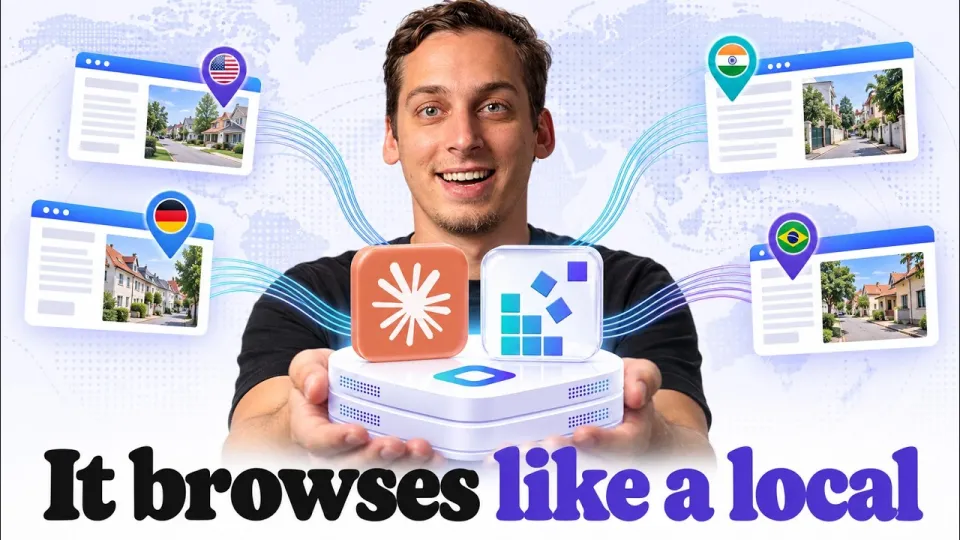
Video: This Claude Code Agent Uses Residential Proxies to Find Hidden Prices
· based on the channel Lukas Margerie
Key takeaways
- Residential proxies route traffic through real home ISPs, making requests appear local.
- They help bypass geo-restrictions and detect regional pricing differences.
- Rotating residential proxies change IPs per request to avoid detection.
- Unlike VPNs, residential proxies reduce the risk of being flagged by websites.
- Tools like DataImpulse provide reliable residential proxy networks for scraping.
What Are Residential Proxies and Why They Matter
Residential proxies are IP addresses assigned by Internet Service Providers (ISPs) to homeowners. Unlike data center proxies or VPNs, which use shared or centralized servers, residential proxies route web traffic through real home internet connections. This makes requests appear as if they come from typical users rather than automated scripts or suspicious data centers.
This unique feature is essential for tasks like web scraping, especially when you want to gather data that varies by user location, such as regional pricing or geo-targeted content. For example, streaming services and SaaS platforms often display different subscription costs depending on the country of the visitor.
How Residential Proxies Work Differently From VPNs
VPNs typically route all your internet traffic through a single server, often located in a data center. While this masks your IP, many websites can identify and block these data center IPs because they’re commonly used for automation or bypassing restrictions.
Residential proxies, in contrast, assign each request an IP from a real home ISP in the target country. This means websites see each connection as a genuine user from that region. Additionally, rotating residential proxies provide a fresh IP address with every connection, making it much harder for sites to detect scraping activities.
Step 1: Choose a Reliable Residential Proxy Provider
To effectively use residential proxies, selecting a trustworthy provider is crucial. Services like DataImpulse offer extensive residential proxy networks with IPs across multiple countries.
Key features to look for include:
- Wide geographic coverage covering countries like the US, Germany, Brazil, and India.
- Rotating proxies that assign new IPs per request.
- High uptime and fast connection speeds to minimize scraping delays.
- Simple authentication methods, such as username suffixes for country targeting.
Step 2: Target Countries Specifically for Geo-Targeted Pricing
Many online services adjust their prices based on the visitor’s location. For example, Spotify Premium costs $12.99/month in the US but roughly $1.45/month in India. Canva Pro subscriptions and ChatGPT pricing also vary significantly between regions.
Using residential proxies, you can configure your scraping agent to access pricing pages as if browsing from different countries. This approach allows you to compile accurate, localized price comparisons without VPNs or manual checks.
Step 3: Use Automation Tools Like Claude Code and Playwright
To streamline data collection, integrate residential proxies with automation frameworks. Claude Code is an AI agent that can open multiple pricing pages via residential proxies and extract structured data. Playwright, a browser automation library, helps simulate real user interactions across different regional proxies.
Together, these tools enable:
- Automated navigation of pricing pages.
- Extraction of pricing details from multiple countries simultaneously.
- Handling of dynamic content and JavaScript-heavy sites.
Step 4: Analyze and Compare Pricing Data
With the data collected through residential proxies and automation, you can perform a pricing teardown. This involves comparing subscription costs, identifying hidden regional discounts, and revealing geo-targeted pricing strategies.
For SaaS companies and template sellers, understanding these regional differences can inform pricing strategy adjustments and competitive analysis. It highlights opportunities for market-specific offers or adjustments based on local purchasing power.
Step 5: Overcome Common Challenges in Using Residential Proxies
While residential proxies provide many advantages, some challenges remain:
- Cost: Residential proxy services are typically more expensive than data center proxies.
- Speed: Routing through home ISPs can be slower than direct data center connections.
- Detection: Some websites actively blacklist known proxy IPs, requiring proxy rotation and IP diversity.
To address these, maintain a pool of rotating proxies, monitor IP health, and combine proxies with smart automation to mimic natural browsing behavior.
Useful Links
Итог
Residential proxies are powerful tools for accessing geo-restricted content and uncovering hidden pricing across different countries. By routing requests through real home ISPs, they provide authentic local IP addresses that help avoid detection and capture accurate data. Integrating proxies with AI agents like Claude Code and automation tools such as Playwright enables efficient, automated web scraping for price comparison and market research. For anyone interested in regional pricing strategies or competitive SaaS analysis, exploring residential proxies is essential. For a detailed walkthrough and real-world examples, check out the channel Lukas Margerie and consider trying DataImpulse residential proxies to get started.
Source: This Claude Code Agent Uses Residential Proxies to Find Hidden Prices · Markdown version
Questions & answers
What is the main difference between a VPN and a residential proxy?
A VPN routes all your traffic through a single data center server, which can be flagged by websites, while a residential proxy sends each request through a real home ISP IP, making it appear as a local user and reducing detection risk.
Why are residential proxies better for web scraping pricing data?
Residential proxies provide authentic IP addresses from actual home connections, enabling access to geo-targeted content and regional pricing that data center IPs or VPNs might not reveal due to blocking or detection.
How do rotating residential proxies improve scraping effectiveness?
Rotating proxies assign a new IP address for every connection, preventing websites from detecting repeated requests from the same IP and reducing the chances of getting blocked during scraping.
Can residential proxies help uncover regional pricing differences for services like Spotify or Canva?
Yes, by using residential proxies from different countries, you can access localized pricing pages and compare subscription costs accurately, revealing significant pricing gaps across regions.